
Hawaii Jail Roster Search
The Hawaii jail roster is the public record of people held in state correctional centers across the islands. Hawaii runs a unified correctional system, so jail and prison beds sit under one state agency rather than local county sheriffs. You can search the Hawaii jail roster by name through VINELink, check recent arrest logs posted by county police, or ask the Department of Corrections and Rehabilitation for custody status. Each tool gives you a piece of the Hawaii jail roster picture. Pick the one that fits what you need to find.
Hawaii Jail Roster Overview
Hawaii Jail Roster Overview
Hawaii is unique. The state runs one unified jail and prison system. There are no traditional county jails here. The Department of Corrections and Rehabilitation holds everyone who is booked, pre-trial, or sentenced to a short term. That matters when you search the Hawaii jail roster. You are not pulling up a county sheriff's website. You are checking a state roster that pools names from every island. The agency took its current name on January 1, 2024. Before that date it was known as the Department of Public Safety.
The state's main tool for the Hawaii jail roster is VINELink, part of the Statewide Automated Victim Information and Notification system. VINELink is free. It is open 24 hours a day. You can look up an inmate by name or by offender ID number. The Hawaii jail roster on VINELink shows current custody status. It also lets you sign up for alerts when that status changes. That helps victims, family, and anyone else who needs to know when release or transfer happens.
Below is the official homepage for the Department of Corrections and Rehabilitation, the agency that holds the master Hawaii jail roster.
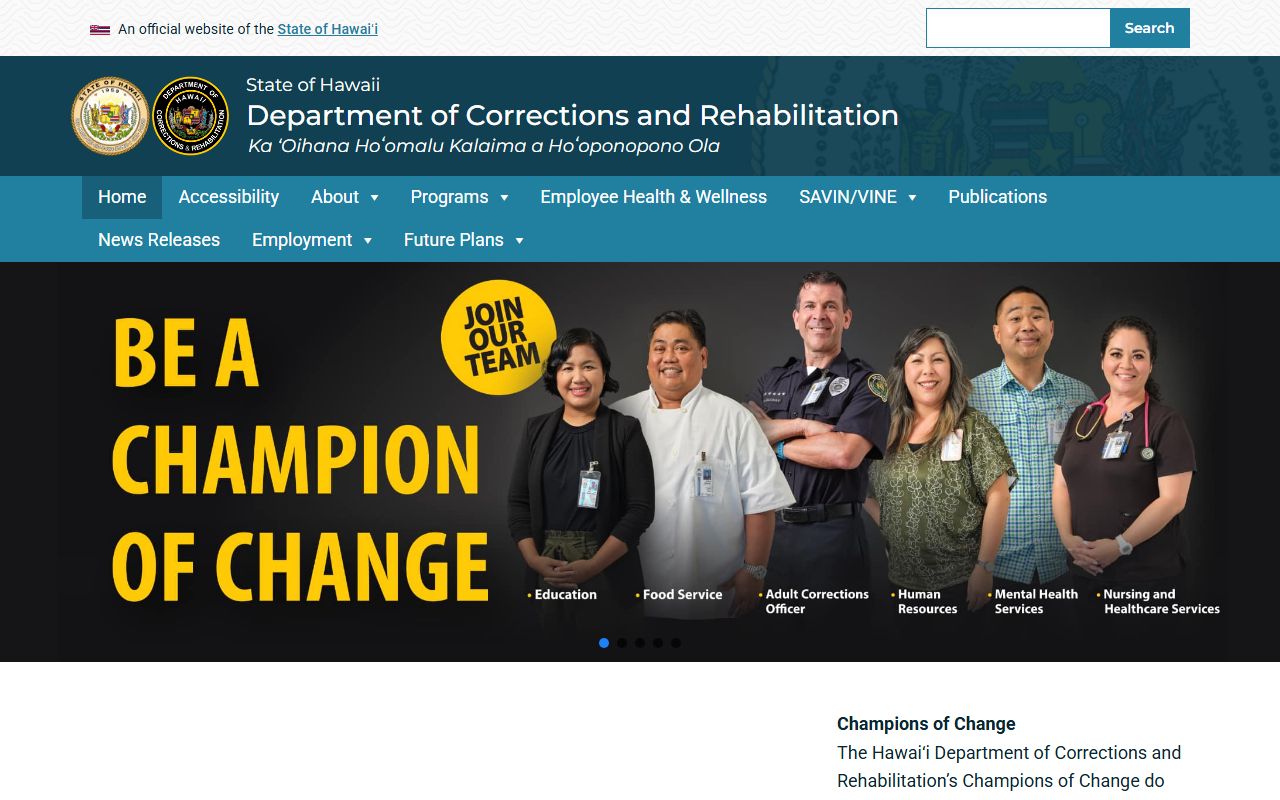
The DCR site lists facility pages, visiting rules, and contact numbers. You can click through to any island facility to read about the local jail roster intake and booking process.
How to Search the Hawaii Jail Roster
There are three main ways to search the Hawaii jail roster. You can use VINELink for custody status. You can read county police arrest logs for fresh bookings. You can ask the DCR or a local facility for a direct answer by phone. Each path lands on a different slice of the roster, so pick based on what you know and what you need.
VINELink is the fastest Hawaii jail roster tool for most people. You open the site, pick Hawaii, and type a name. The system checks state custody and shows the facility, ID, and status. If you sign up, VINELink will call, email, or text you when that inmate moves. The service is anonymous. The person you search will not know you looked.
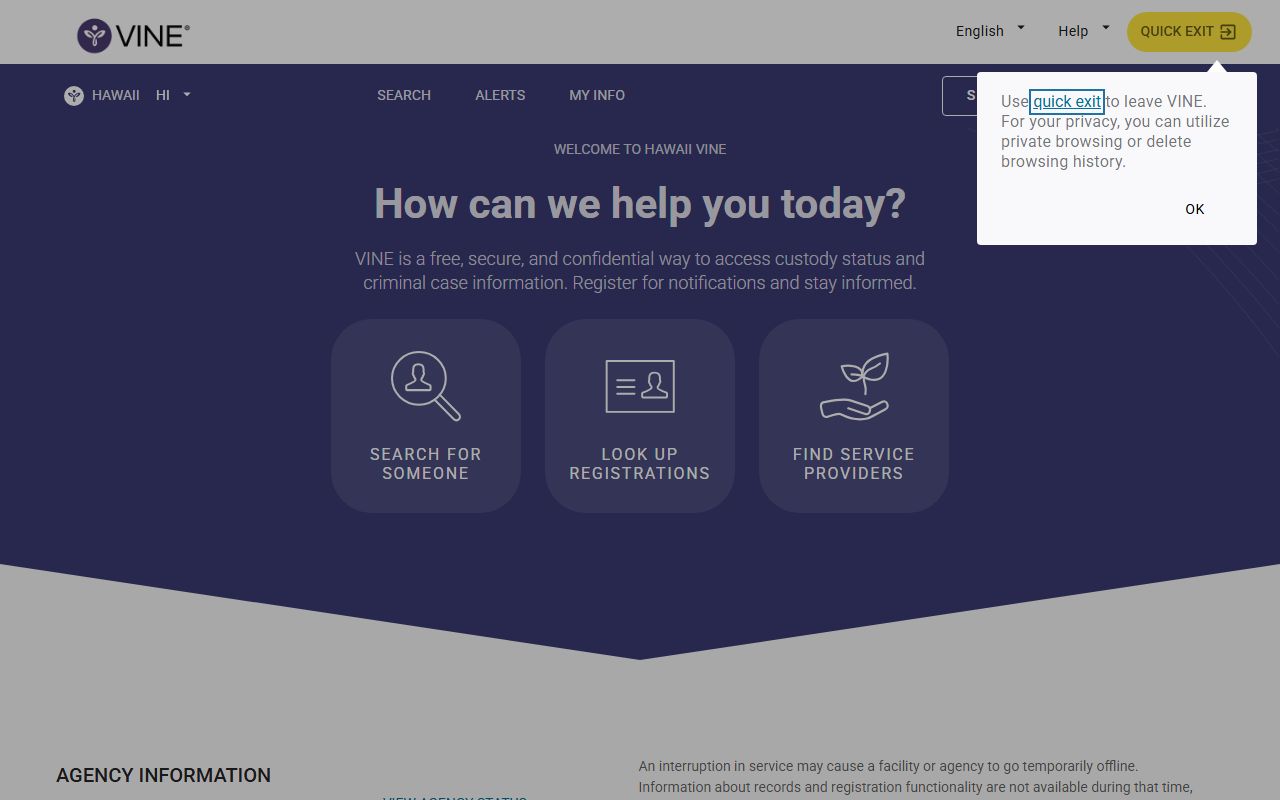
The screenshot above shows the Hawaii VINELink page, where anyone can run a Hawaii jail roster lookup for free.
To run a VINELink search, you need:
- Full name of the inmate
- Offender ID number, if you have it
- Date of birth or age range to filter results
County police sites publish short-term arrest logs. These are not the Hawaii jail roster as a whole, but they show who was booked in the last two weeks. The Honolulu Police Department posts its adult arrest log every day. Other counties do the same with booking logs in PDF form.
Where Hawaii Inmate Records Are Kept
The master Hawaii jail roster lives with the state Department of Corrections and Rehabilitation. Police reports that feed into the roster live with county police records divisions. Court files that show charges, pleas, and sentences live with the state judiciary. Each file type answers a different question, and each has its own request process.
The state judiciary runs eCourt Kokua, an online system that shows case information, court dates, and outcomes. It covers the First Circuit on Oahu, the Second Circuit on Maui and Molokai, the Third Circuit on Hawaii Island, and the Fifth Circuit on Kauai. Searching eCourt Kokua tells you if a person on the Hawaii jail roster has open charges, what those charges are, and when they are next due in court.
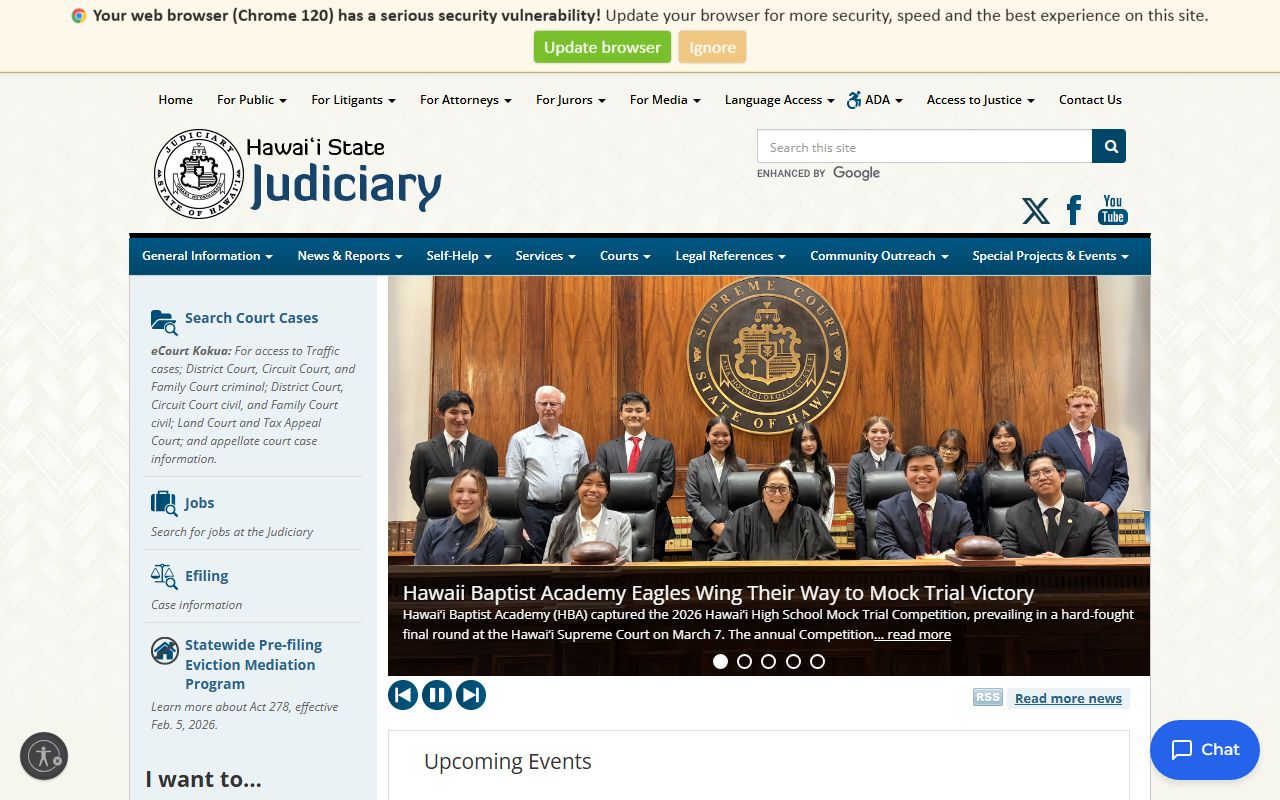
The screenshot above is the courts homepage where eCourt Kokua lives. Use it to link a Hawaii jail roster name to a court file.
For historical inmate records, the Hawaii State Archives holds old jail roster books and territorial correctional files. Records that are 75 years old or older are generally open to the public for research.
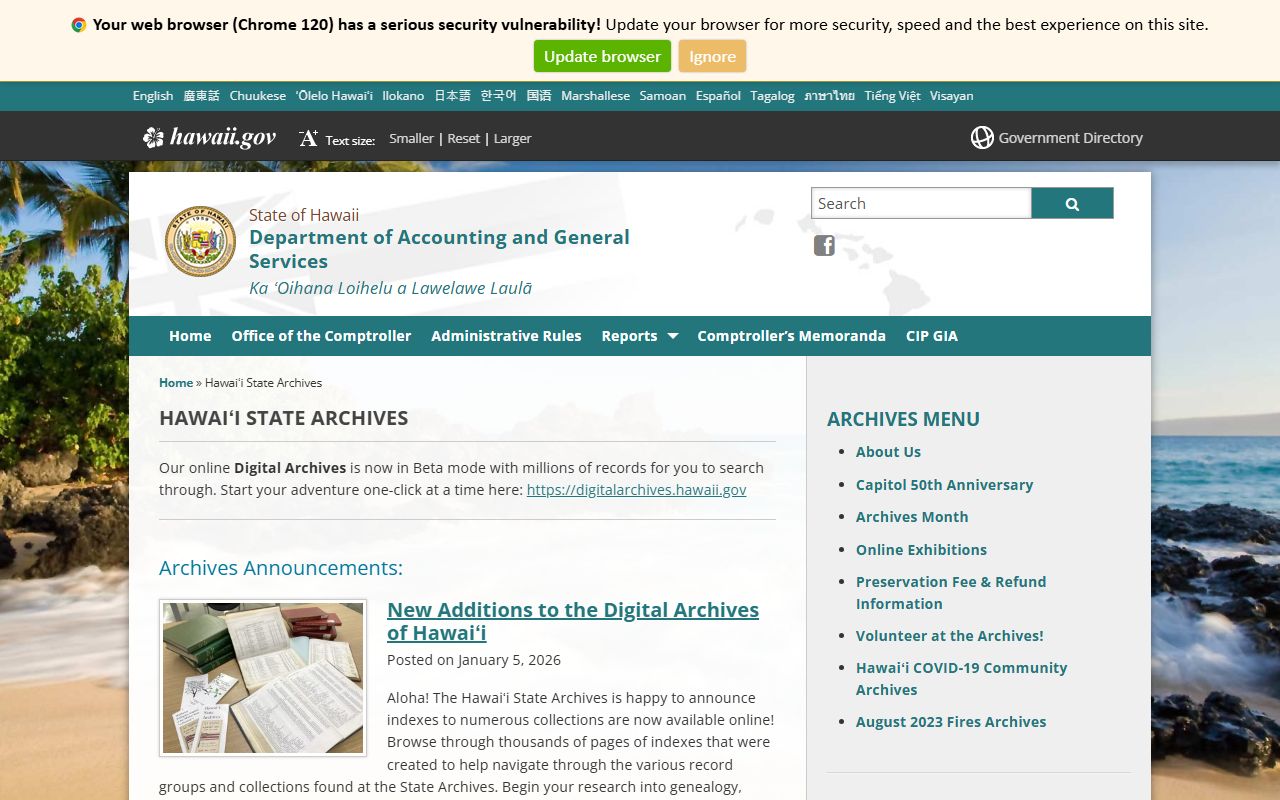
The archives page shows how to book a research appointment. This is the right stop for genealogy or any deep historical dive into a Hawaii jail roster name from the last century.
Note: The Hawaii jail roster pulls from one state agency, but the full record is split across police, courts, and archives. Plan on checking more than one office.
VINELink and Hawaii Jail Roster Access
VINELink is the tool built for crime victims, but anyone can use it. The state agreed to feed its jail roster data into the nationwide VINE platform so families and the public can track custody status with no paperwork. VINELink works for adults in state custody. It does not cover federal inmates or people still in a police holding cell before arraignment.
To sign up for alerts, pick the inmate, enter your phone, email, or both, and choose a four-digit PIN. VINELink will send you a message when that person is released, transferred, paroled, or scheduled for a parole hearing. The alerts run day and night. They are free. Many family members use the service to know when a loved one is out. Victims use it to add a layer of safety after the case is over.
Federal inmates in Hawaii are tracked on a separate system. The Federal Bureau of Prisons inmate locator covers anyone booked into federal custody from 1982 to now. This matters because some Hawaii arrests end up in federal court rather than the state Hawaii jail roster.
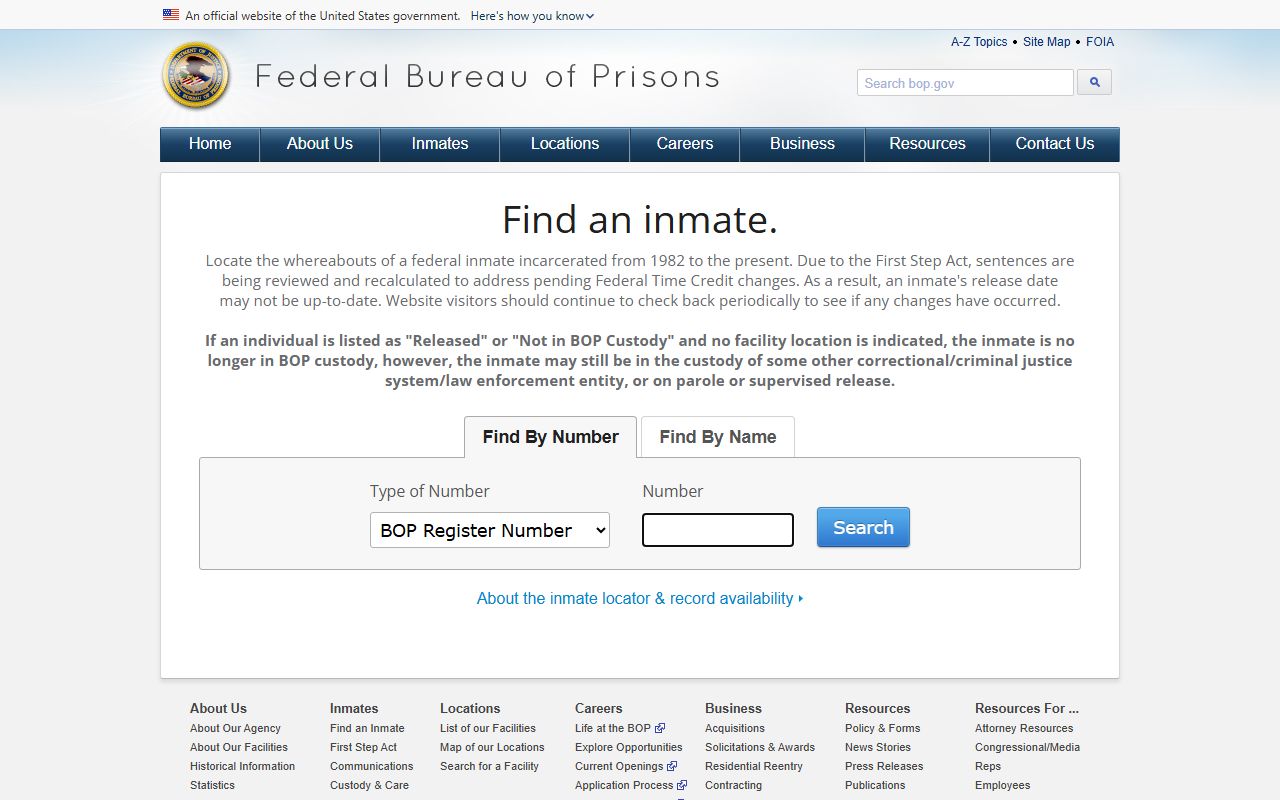
The BOP locator lets you search by register number, FBI number, or name with filters for age, race, and sex.
The main federal holding site in the state is the Federal Detention Center Honolulu. It sits at 351 Elliott Street, Honolulu. The center holds men and women who have pending federal cases.
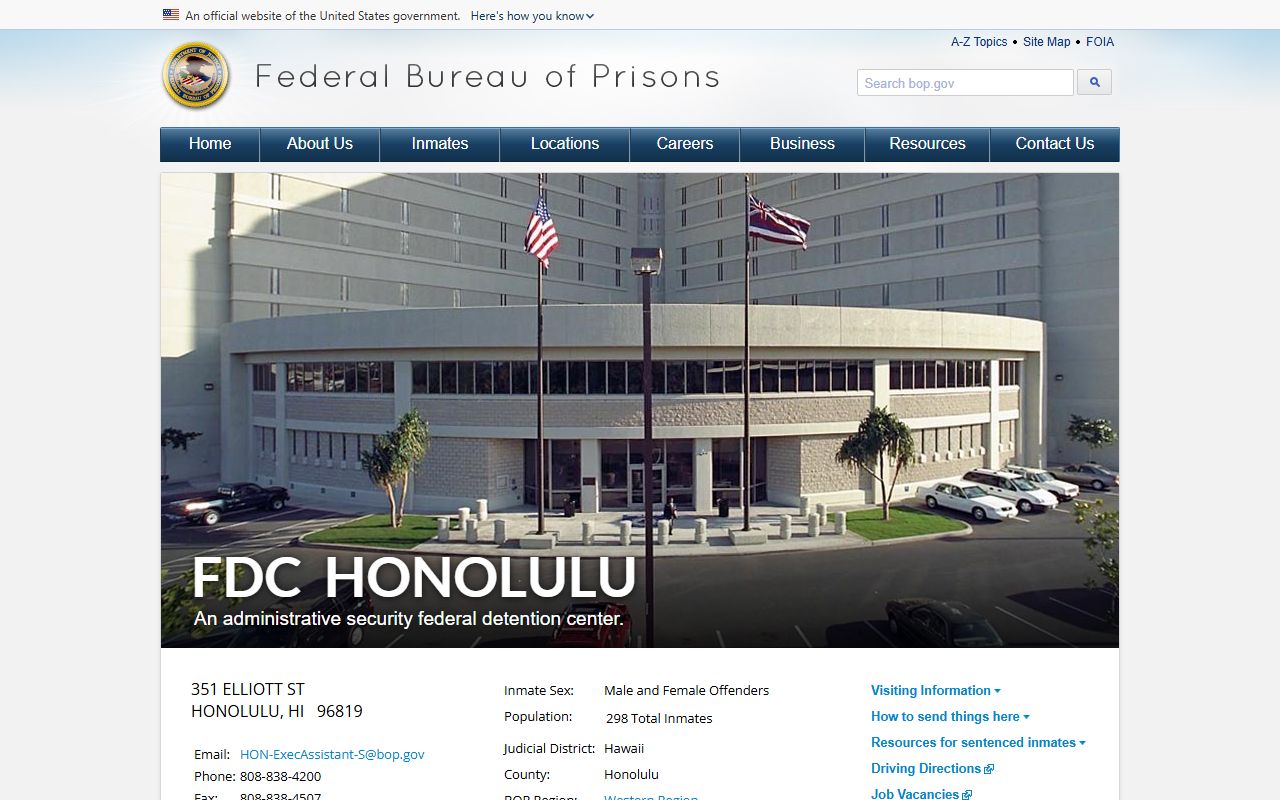
The FDC page above is where you will find contact info and visiting rules for federal detainees.
Police Arrest Logs Across Hawaii
County police departments feed the front end of the Hawaii jail roster. When officers book someone, the name lands first on a local police log, and then on the state roster once intake is done at a community correctional center. Log retention varies. Honolulu posts logs for 14 days. Hawaii County and Maui County publish periodic booking reports. Kauai posts daily media arrest reports.
The new Hawaii Department of Law Enforcement took over the state Sheriff Division in 2024. DLE handles state-level law enforcement work. County police still handle the day-to-day arrests that make up the Hawaii jail roster. Knowing which agency owns the record saves time when you file a request.
The DLE homepage explains the new split between corrections and law enforcement and lists the divisions that moved over in the reorg.
County booking logs list date and time of arrest, name, age, sex, race, arresting officer, and the charge. They do not include photos in most cases. They do not include juveniles. For a photo, a full case summary, or an older record, go to the county police records division or the court.
Correctional Facilities Across Hawaii
Four community correctional centers hold most names on the Hawaii jail roster: Oahu Community Correctional Center (OCCC) in Honolulu, Hawaii Community Correctional Center (HCCC) in Hilo, Maui Community Correctional Center (MCCC) in Wailuku, and Kauai Community Correctional Center (KCCC) in Lihue. A few longer-term prisons hold sentenced inmates.
The Halawa Correctional Facility in Aiea is the main long-term state prison. It houses sentenced men. The phone is (808) 485-5200.
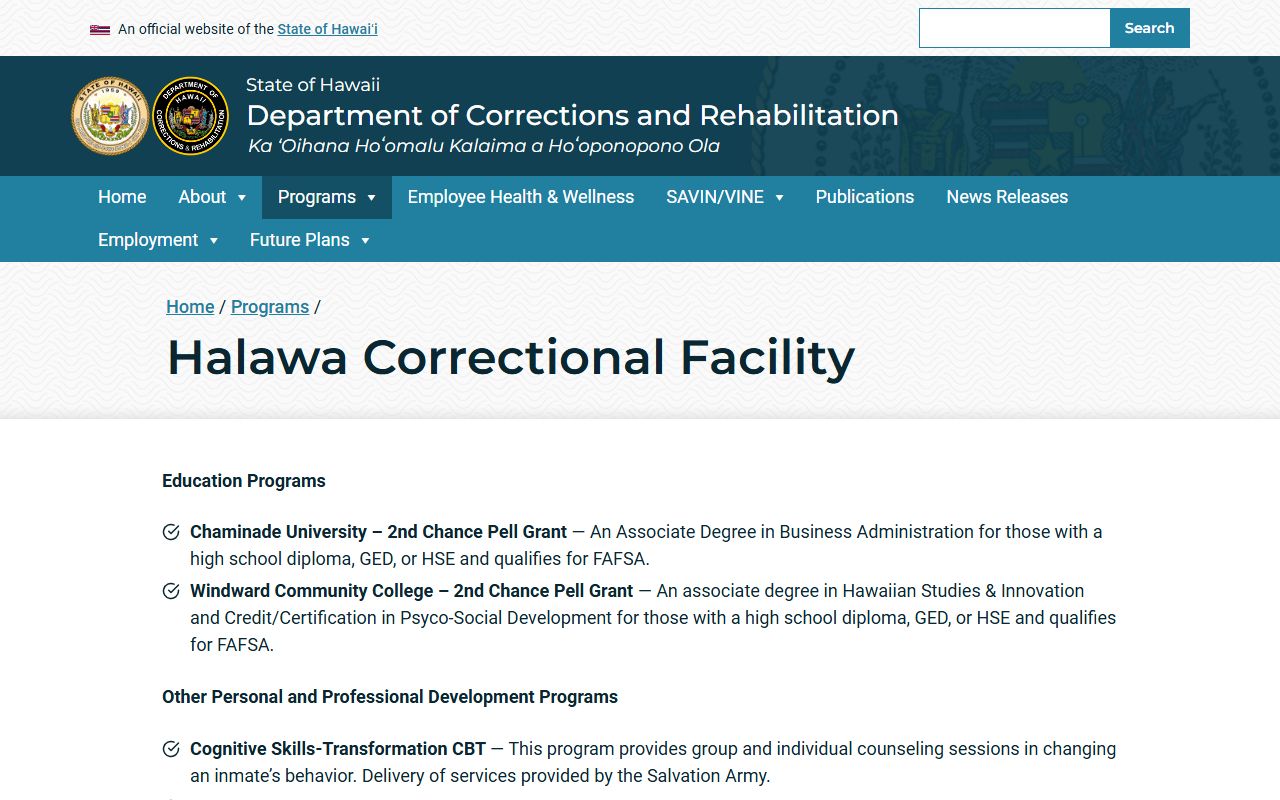
The Halawa page above lists contact info, program details, and visitor guidance for a facility that sits at the back end of the Hawaii jail roster pipeline.
The Kulani Correctional Facility sits on the slopes of Mauna Loa on Hawaii Island. It is a minimum-security prison focused on reentry and vocational training.
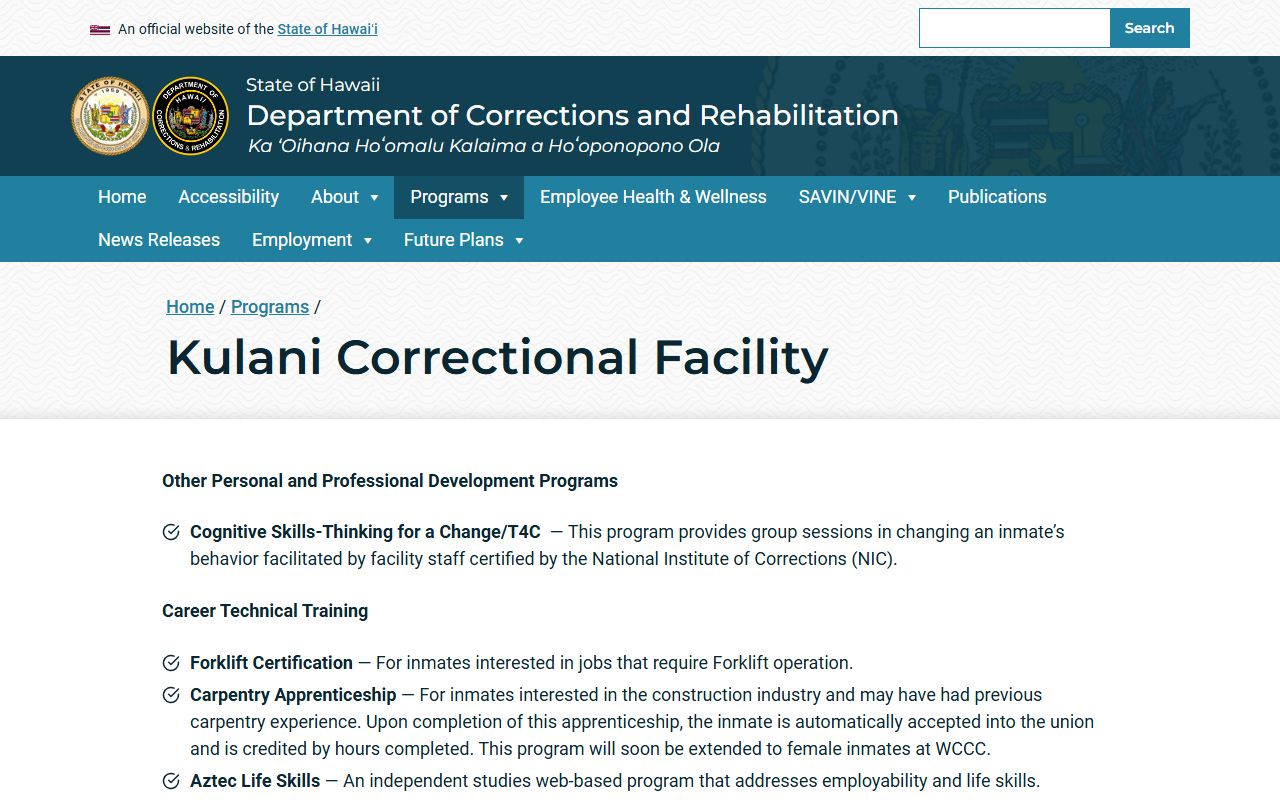
Kulani's page covers the programs men complete before release. Names on the Hawaii jail roster at Kulani are near the end of their sentences.
Hawaii Jail Roster Laws and Rules
Access to the Hawaii jail roster runs through the Uniform Information Practices Act, or UIPA, at chapter 92F of the Hawaii Revised Statutes. Under UIPA, all government records are open unless a specific law closes them. Section 92F-12 names directory information at correctional facilities as a required disclosure. That is the legal root that makes the Hawaii jail roster a public record.
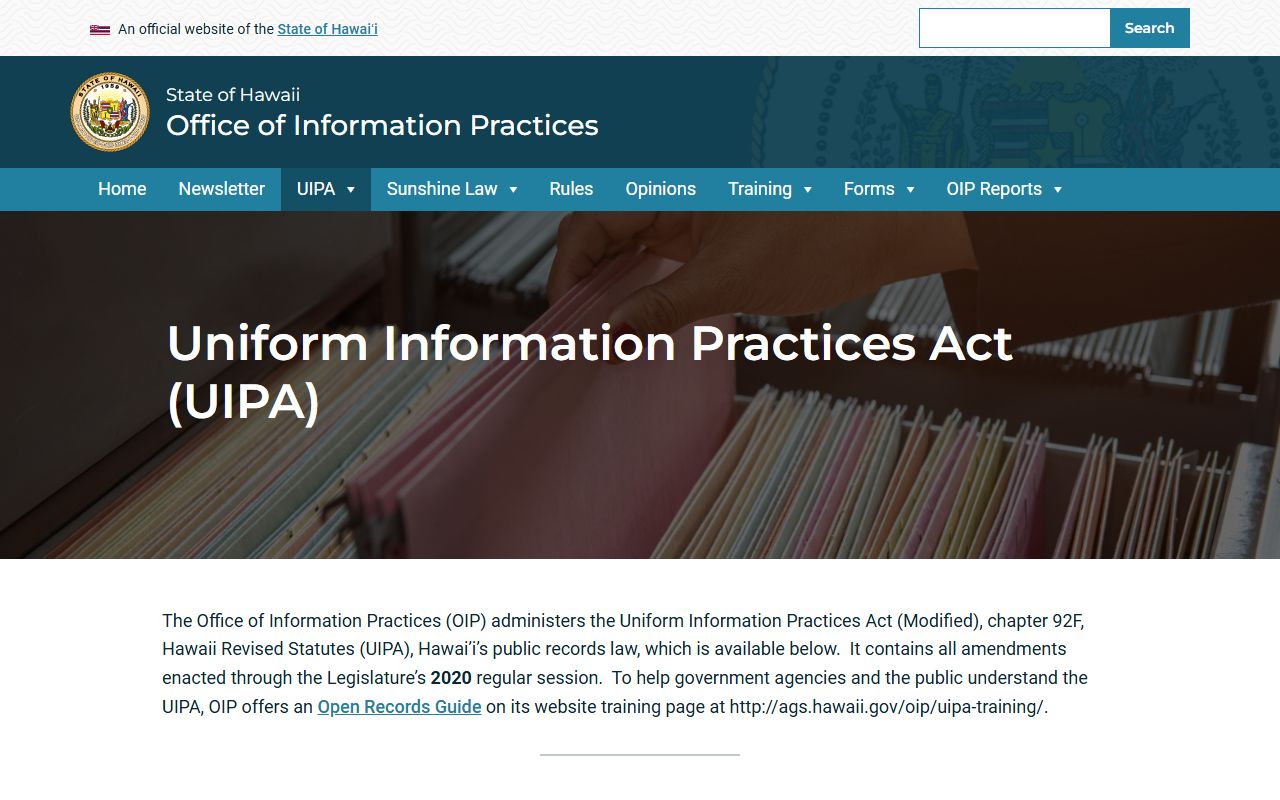
The OIP page above explains how UIPA applies to jail roster requests, including the 10-business-day response rule.
The statute that sets up the correctional system itself is Hawaii Revised Statutes Chapter 353. This chapter gives DCR the power to run state facilities. Section 353-2.5 tells the department to keep records on every person in custody. That record is the backbone of the Hawaii jail roster.
The HRS 353 page lays out duties, inmate rights, and rule-making authority for the agency that keeps the Hawaii jail roster up to date.
Non-conviction records have a tighter rule. HRS § 846-9 limits access to arrest data that did not lead to a conviction. Juvenile arrest data is closed. A sealed or expunged record is off limits too. That is why the public Hawaii jail roster shows current custody rather than a full criminal history.
Heads up: The Hawaii jail roster does not show sealed, expunged, or juvenile records. For a full criminal history, use the eCrim system run by the Hawaii Criminal Justice Data Center.
The Hawaii Criminal Justice Data Center lives inside the Attorney General's office. HCJDC keeps statewide criminal history records. A name-based eCrim search runs $5 per lookup, and a certified report is $12. An in-office or mail-in request runs $30.
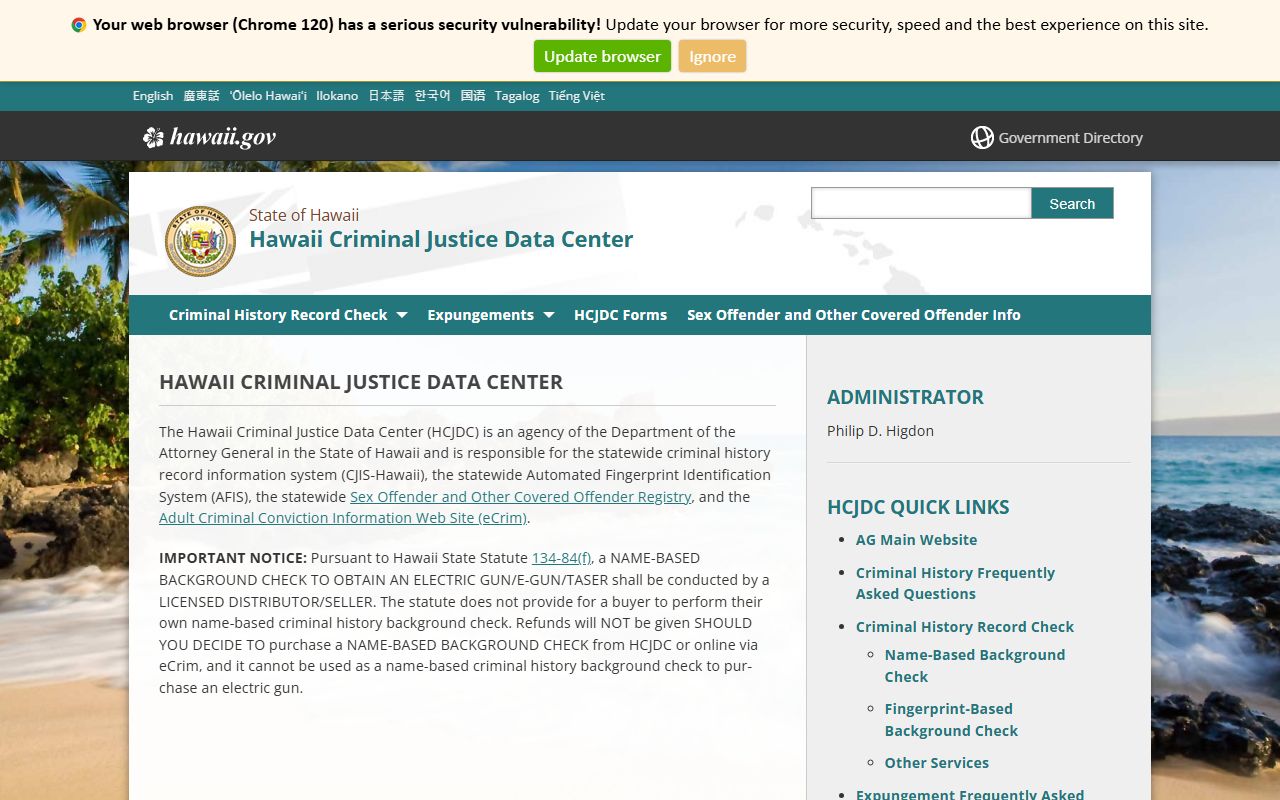
HCJDC's page lists forms, fees, and public access sites on Oahu, Hawaii Island, Kauai, and Maui where you can view Hawaii jail roster conviction records in person.
Getting Copies of Hawaii Arrest Records
The Hawaii jail roster shows who is in. Arrest records show what happened on the way in. You get arrest records from county police records divisions. Most counties charge a small per-page fee and take 10 business days or less to respond. UIPA allows an extra 10 days when the request is complex.
Police reports are released only when the case is closed. A victim or witness who needs proof sooner can often get a verification letter. Redactions cover personal data like names of witnesses, home addresses, phone numbers, dates of birth, and any juvenile identifiers. The redactions follow HRS § 92F-13 under UIPA.
For a full criminal history, use eCrim online or visit one of the six HCJDC public access sites. The access sites are in Honolulu, Hilo, Kailua-Kona, Lihue, and Wailuku. Each printout runs about $25. Fingerprint-based checks cost more and need a scheduled visit.
Death records for people who died while in custody sit with the Hawaii Department of Health Vital Records office. Access is limited to immediate family, legal reps, and spouses, unless the record is 75 years old or older.
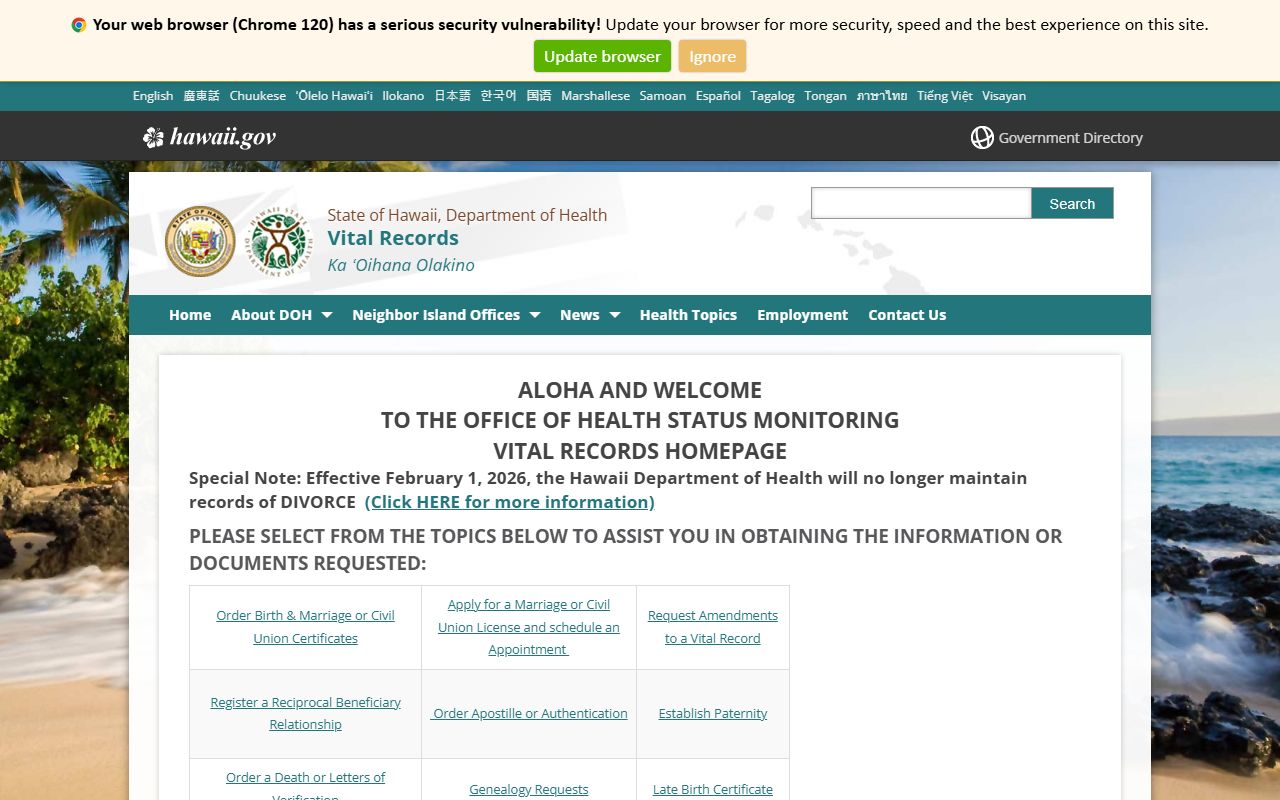
Vital Records explains who can ask and what proof you need before a death certificate for an inmate will be released.
Oversight of the Hawaii Jail Roster
The Hawaii State Legislature controls the budget and the laws behind the Hawaii jail roster. Committee hearings and statutory amendments shape how the system runs. Recent sessions have focused on reentry, recidivism, and mental health care inside the facilities.
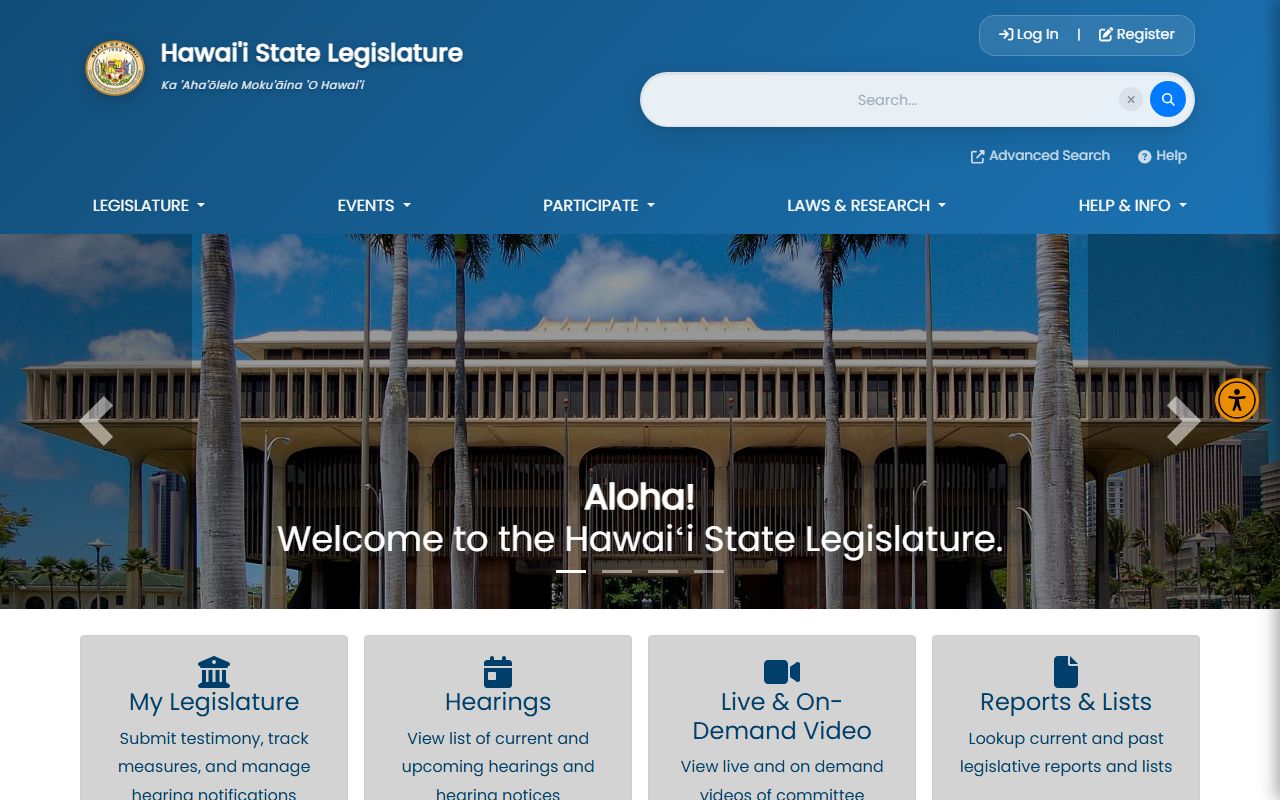
The legislature's site holds the full text of every bill and every chapter of the HRS that shapes the Hawaii jail roster.
The Hawaii State Commission on the Status of Women tracks conditions for women in state custody. Its reports cover demographics, offenses, and reentry challenges for women held at the Women's Community Correctional Center in Kailua on Oahu.
The commission's page posts annual reports with Hawaii jail roster data on women, family reunification, and gender-responsive services.
Is the Hawaii Jail Roster Public
Yes. Under UIPA, the state must share directory information about anyone in custody. Name, facility, and general status are open. You do not have to explain why you are asking. You do not need to be related to the person.
Some pieces are closed. Medical records, juvenile records, sealed or expunged records, ongoing investigation files, and anything that would reveal a confidential source are off the Hawaii jail roster for public view. DCR can also withhold security-sensitive data, like cell assignments in high-risk cases.
Most of the Hawaii jail roster is public. Medical, juvenile, and sealed records stay closed under UIPA and related statutes.
Hawaii Jail Roster by County
Each of Hawaii's five counties has its own piece of the Hawaii jail roster. Police arrests, community correctional center bookings, and court filings vary by island. Pick a county below to find local facility info, police contacts, and resources.
Major Hawaii Cities
These cities feed names into the Hawaii jail roster through their county police departments. Pick a city to see which facility and which records office handle that area.